 My introduction to the work of the Australian writer Angela Slatter occurred when I stumbled across the Tor.com reprint of “St. Dymphna’s School of Poison Girls” in May 2015. The story unfolded in slow waves, and it lulled me with its seductive beauty. My initial interest in this story aligned with the title as I had been reading about St. Dymphna through an extension of my research on the origins of “Allerleirauh.” The fairy tale elements appeared in Slatter’s story, but they appeared in unfamiliar ways. Interest stoked, I obsessively sought out Slatter’s stories, and soon discovered a whole new world of fairy tales to explore. I was hooked.
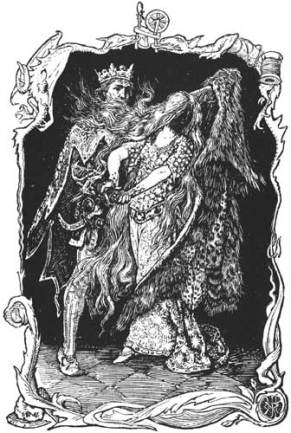
In 2016, the U.S. publication of Slatter’s short story collection A Feast of Sorrows made her work more accessible; her other publications were released as limited editions in the UK. (A Feast of Sorrows includes the first three stories in The Tallow-Wife, which was recently released by FableCroft as a limited edition hardcover.) After a couple of readings, I discovered patterns that tied the characters together in a world of the author’s own making. In addition to cameo character appearances, Slatter also utilized subverted fairy tale references as a means of creating familiarity with the unfamiliar—a technique I would like to duplicate in my own work.
About halfway through my first reading of A Feast of Shadows, I noticed the repetition of a character from an earlier story. I stopped for a moment, thought about it, and then decided it must have been a mistake. Another of these moments came about two-thirds of the way through the collection. I recognized another character and sorted back through the stories to find her. That was when I realized that Slatter had deliberately seeded her stories with bits from other narratives. And, not only did her characters show up again and again, but settings made repeat appearances as well. The effect was a growing sense of familiarity even though the stories are all set in a secondary world.
 Bellsholm, which “sprawls along the banks of the wide Bell River, loose-limbed as a sleeping giant,” is featured prominently in “By My Voice I Shall Be Known” and is linked to Ballantyne’s Coffin Emporium in “The Coffin-maker’s Daughter” (143). Downstream from Bellsholm is Breakwater, the location of “the Weeping Gate” and the refuge of the criminal mastermind Bethany Lawrence from “The Tallow-Wife” series. And, far off in distant Lodellan, sits the Cathedral with its ghostly guard of six wolfhounds. Slatter takes her readers on a tour of Lodellan’s quarters in “Sourdough” and then into the Cathedral’s secret passageways to the palace in “Sister, Sister” and “What Shines Brightest.”

At first glance, the mention of these places in various stories might appear to be an after-thought. However, the subtle hints strengthen the underlying network of commerce and immigration that add complexity to the stories’ common world. For instance, even though “By My Voice I Shall Be Known” takes place in Bellsholm, the protagonist is gifted with a promise in the shape of a silver thimble “all the way from Lodellan” (149). She is, however, betrayed by her lover, who returns from Breakwater with a pretty bride-to-be on a clipper named Revenant: “…it plied the seas then crept up rivers like ours, to dispatch passengers and some cargo—mostly high end, expensive and small, cargo and passengers both…” (150).
Several characters, including Mother Magnus and Emmaline make cameo appearances, but the one who first made me conscious of these repetitions was Hepsibah Ballantyne, the independent, murderous protagonist in “The Coffin-maker’s Daughter.” An older Hepsibah makes an appearance as a guest teacher in “St. Dymphna’s School for Poison Girls;” Ballantyne’s Coffin Emporium is mentioned in “By My Voice I Shall Be Known;” and a weathered headstone reveals the trace of the name ‘Hepsi…tyne’ in “The Tallow-Wife.”
 Once I saw the threads, I began to wonder what other stories existed with these characters in them. In my hunt for hidden treasure, I reached out to the author through social media. According to Slatter, A Feast of Sorrows was a U.S. collection primarily cobbled together from reprints, including pieces from The Bitterwood Bible and Other Encounters and Sourdough and Other Stories. Over the last year, Slatter’s work has become more and more available to U.S. audiences. With every story I read, I search for more connections tied to the cohesive worlds Slatter builds, worlds that exist long after the reader has finished the last page. If nothing else, I’m eager to learn more about the fates of the people inhabiting the ocean harbor of Breakwater, the ruslka singing from the riverbank near Bellsholm, and the ghostly wolfhounds guarding the Cathedral in Lodellan. It doesn’t get much better than that.

Author website: Angela Slatter
Select short fiction online:
- “The Coffin-Maker’s Daughter,” Nightmare Magazine.
- “St. Dymphna’s School For Poison Girls,” Tor.com.
- “The Jacaranda Wife,” The Dark.
- “By My Voice I Shall Be Known,” The Dark.
- “Ink and Fur,” Gamut Magazine.
- “Finnegan’s Field,” Tor.com.
- “Bearskin,” The Dark.
- “Neither Time Nor Tears,” The Dark.
- “Brisneyland by Night,” Lightspeed Magazine.
Short fiction collections:
- A Feast of Sorrows. Prime Books, 2016.
 The Bitterwood Bible (and Other Recountings). Tartarus Press, 2014.
- Sourdough and Other Stories. Tartarus Press, 2013.
- The Girl with No Hands (and Other Tales). Ticonderoga Publications, 2010.
Novels:
- Corpselight. Jo Fletcher Books, 2017.
- Vigil. Quercus Publishing, 2016.
- Of Sorrow and Such. Tor.com, F First Edition edition, 2015.
 One bright summer day, the Creator sat under a tree watching a group of laughing children at play. A brown pup romped through a riot of wildflowers. The sun lit a bright blue sky dotted with wispy, white clouds. A songbird landed in the branches overhead, loosing a shower of pine needles.
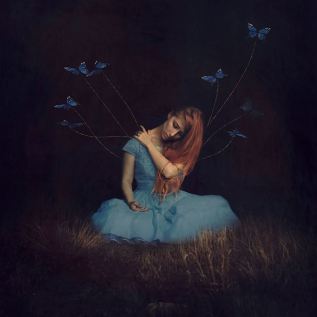
 Brimming with happiness, he walked to the children and offered them the bulging sack. The beautiful girl with black hair opened the magic bag and out flew thousands and thousands of butterflies in every color ever created. Enchanted, the girl said she had never seen anything so beautiful. The children agreed and the Creator was glad.
 White butterflies, they say,in a row are flying.
 Like many ancient Southwestern cultures, the Hopi often utilize the symbolism of butterflies. Prehistoric Hopi pottery shows this affinity as does the three Hopi kachina with butterfly origins — Poli Sio Hemis Kachina (Zuni Hemis Butterfly Kachina), Poli Taka (Butterfly Man) and Poli Mana (Butterfly Girl). However, the butterfly assumed a more menacing aspect to the Aztecs in Mexico. The goddess Itzpapálotl, or Obsidian Butterfly, was represented as a strong ferocious goddess with butterfly wings and big claws on her hands and feet. In Mexico, many people still believe that a black butterfly at the door portends an impending death.
 In the first days of the people, many warriors sought the favor of the beautiful Flower Maiden. But of them all, she loved only two – Hidden Love and Iron Courage. They each contended for her love, but not even the Sky Father could help her make the choice. Then fate stepped in and both warriors were called to a great battle against invaders coming from the north. Flower Maiden bid them each good-bye with a heavy heart. Many months passed as she waited for her warriors to return, but when the war party rode back into camp, neither of her loved ones returned with the victorious.
 I couldn’t be more thrilled with the acceptance issued by co-editor Melanie R. Meadors (science fiction and fantasy author, blogger at
  In the fall of 2015, I happened across the short story “Little Man” by
 The evil stepmother in “A Wild Swan” is given sympathy after she turns her 12 stepsons into swans and commands them to fly away: “Do we blame her? Do we, really?” (5). The witch from “Hansel and Gretel,” finds her voice in “Crazy Old Lady”: “Were you relieved, maybe just a little, when they lifted you up (you weighed almost nothing by then) and shoved you in to the oven?” (20). In addition to identity, Cunningham plays with sexual themes; Rapunzel keeps her shorn hair so her blinded prince can make love to the piece of her that was lost in “Her Hair,” a boy marries the first girl who doesn’t treat him differently just because he has a prosthetic leg in “Steadfast; Tin,” and a girl agrees to play dead for exactly twelve minutes so her Prince Charming can play out his necrophiliac obsession in “Poisoned.”
 Work Cited
 Terror poised on a tree branch. He swoops silently out of the shadows upon a victim unaware of his presence until, with a thudding impact, powerful talons crush its flesh. A curved beak flashes. A quivering end to one life brings sustenance to another.
 With fringelike leading-edge wing feathers that muffle the turbulent sound of wind rushing, owls descend in eerie silence upon their prey. And, with a retina equipped with an abundance of rod cells, their eyes capture light for nighttime hunting. As such, these capabilities are often linked to Native Americans tales of death and ghosts.
 Parents receive instruction right along with the children. For instance, in a tale told by the Tewa people, a disobedient boy sneaks out at night to watch his elders in the kiva. His father catches him, beats him with a stick, and sends him into the darkness, where the boy cries and moans. Father Owl glides out of the night and lands before him. He instructs the boy to get on his back. Father Owl carries the child back to his nest, which is filled with his own fledglings. “This is your new home,” says Father Owl. “I took you away from your mother and father because they were always scolding you.”
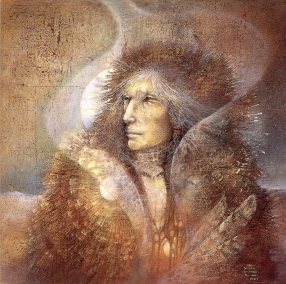 When the boy’s parents discover their son is missing, they regret beating him and begin searching for their lost child. After a time, seeing the parents nearly dead from despair, Father Owl lets the child return to his home on the high pueblo.
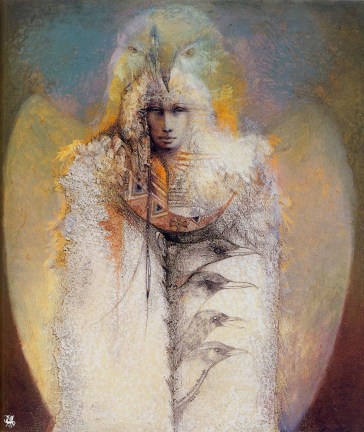 Eager to see her son, the mother can’t wait, and on the morning of the fourth day, she peeks into the room. That night, when the parents open the door, they find not their son, but a large owl flying from one corner to the other.
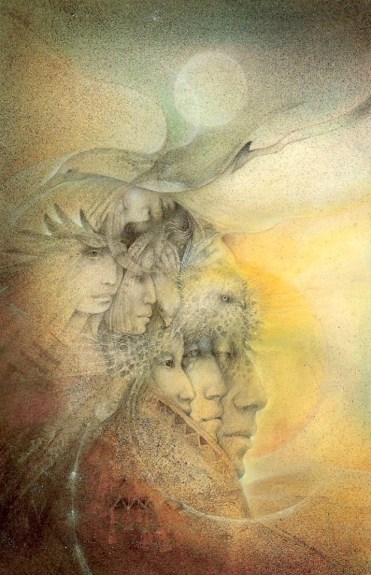 All Southwestern Native American tribes have similarly complex — usually foreboding — stories about Owl, who often serves as a specter to keep willful children in line. In “The Mountaintop Way,” a Navajo ceremonial tale, Owl Boy’s human mother abandons him because of his fearsome nature. Spurned and rejected, Owl Boy kills a member of his tribe when he attempts to return to his Navajo family. The narrator intones, “He went to them, but they were afraid of him: his big eyes, his long sharp fingernails, his voice that sounded like the wind playing a flute in a hollow tree.”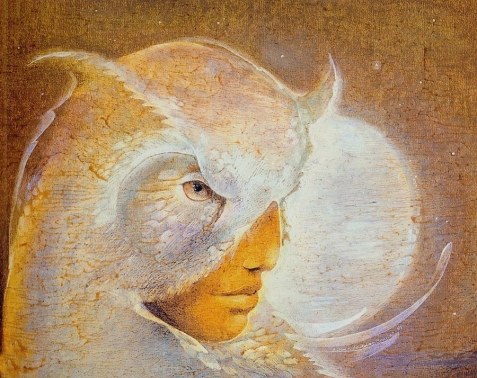
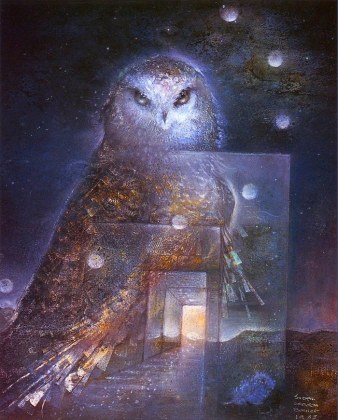 The oldest owl fossils in North America date back some 60 million years to specimens discovered on the Colorado Plateau. Of the 133 species of owls found worldwide today, only 19 species live in North America. Southern Arizona, being the northernmost migratory range for several owls, is home to 13 species — more than any region in the United States or Canada.
 Native Americans in the Southwest made adroit use of many of these remarkable qualities. For instance, the Hopis use owl feathers to make arrows fly silently, so they can strike without warning. And Tohono O’odham medicine men, called “owl-meeters,” used the bird’s uncanny powers to stay unseen in order to ambush their enemies. “Hoot owl medicine man, cut the arrow feathers of this my enemy,” the warriors would implore. “Gray owl medicine man, come with me! Yonder find my enemy and make him helpless!”
 The game went on from dusk to dawn with each side trying to guess where the other had hidden a set of sacred sticks. As the sun came up, the Birds had the most sticks and so won the sun’s daylight. Bear ran off for the cover of darkness, and in his hurry, he put his moccasins on the wrong feet. And Mountain Lion’s fur was tinted golden with the sun. Only his mouth stayed black to show his connection to the night.
 I am the owl.
 I suffer from acute procrastination, especially when times are tough. And times have been extremely tough the last few months. Seeing as it’s the first of March and there are no terrible deadlines hovering, I decided it was time to break the silence.
 A few weeks after this rupture in my home life, I went forward with a scheduled knee surgery to address chronic pain and mobility issues caused by my bicycle accident in June. The surgery was supposed to be a breeze, but it turned out to be more complicated than expected. (Go figure.) Boxing up all of my belongings and being faced with the prospect of moving when I couldn’t even walk put me in an even deeper despair that continued through most of December.
 Things started to look brighter in January. I went to Ireland for 10 days for my second residency at Stonecoast. A few of my classmates and I toured Dublin for three days before taking the train to Howth for a truly remarkable workshop experience. That trip could have (and should have) fueled the fire for half a dozen blog posts. Perhaps, in the coming days, I will return to that time and share some of the details. For now, it’s enough to say that it was a life-changing experience that ended with the thrilling announcement that Elizabeth Hand would be my second semester mentor. I was, and still am, over the moon.
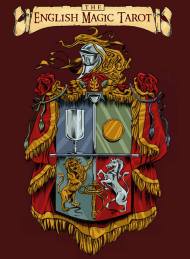 A couple of years ago, a vibrant rendering of
  For more than a decade I had used a
  This new depiction of The Magician drawn by artist
  I connected with Rex through social media and avidly followed his progress as he worked his way through the deck. My Rider-Waite deck was retired after the lifelong friend who’d originally given them to me betrayed our relationship. She had nearly as much energy in that deck as I did and it was time for me to separate myself from the past. Although The English Magic Tarot deck also utilizes the blues, reds, greens, and yellows that are so prominent in the Rider-Waite deck, these images contain darker hues that evoke the English countryside. I loved every single card that he shared and I waited for the deck to become complete. I knew from the beginning that this was a deck I wanted to get my hands on.
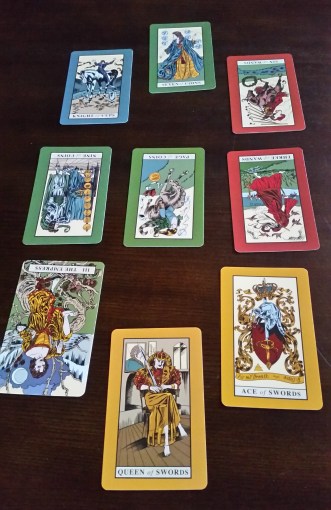 The cards revealed that I was in the middle of a full-blown identity crisis (Page of Coins, reversed) and that I felt isolated and trapped in a place of pain and sorrow (Queen of Swords). My creativity had been stifled (Three of Wands, reversed) and I was hoping for a return to good times and abundance, even if it was just for a short time (Nine of Coins, reversed). In the greater context, the cards showed that I was a sensual and creative person, but that my powers had been blocked (the Empress, reversed). I needed to put my emotions aside in order to make room for new ideas and intellectual insight (Ace of Swords). People around me realized my difficulty in controlling my intense emotional strife (Knight of Cups). The challenge was in accepting the fact that things were not going the way I had hoped, but that I still had the potential to eventually succeed (Six of Wands, reversed). However, with perseverance, I will eventually reach my goals and the rewards of material wealth (Seven of Coins).
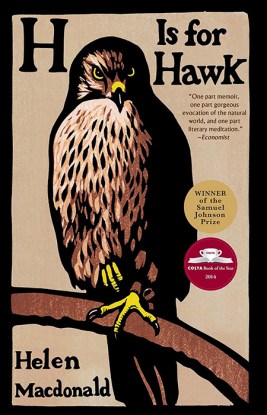 I began reading
  “It struck me then that perhaps the bareness and wrongness of the world was an illusion;” she continues, “that things might still be real, and right, and beautiful, even if I could not see them – that if I stood in the right place, and was lucky, this might somehow be revealed to me.”
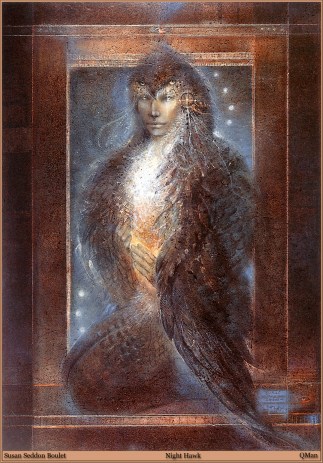 “Like White I wanted to cut loose from the world,” she continues, “and I shared, too, his desire to escape to the wild, a desire that can rip away all human softness and leave you stranded in a world of savage, courteous despair.”
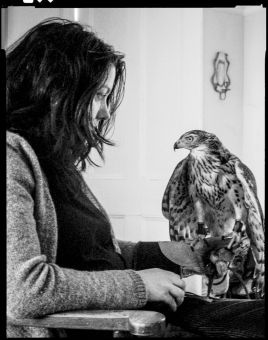 My accident occurred when I was about halfway through the book, just as I had started Chapter 13, “Alice, Falling.” It seemed appropriate. “And me? I do not know,” Macdonald writes. “I feel hollow and unhoused, an airy, empty wasps’ nest, a thing made of chewed paper after the frosts have murdered the life within.” The author’s grief mirrored my own.
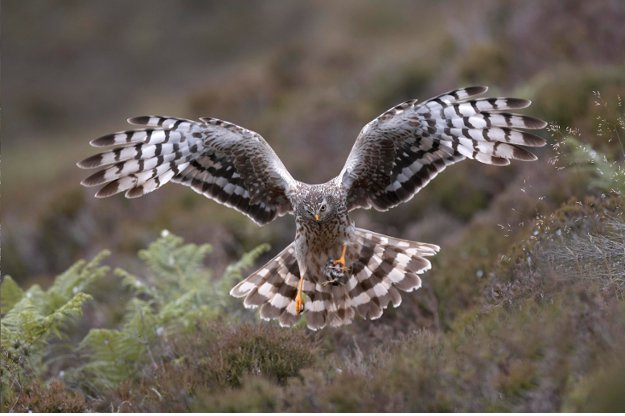















 Carina Bissett